Nebulae
These glowing areas of gas often contain the youngest stars in our galaxy as well as some of the most fanciful images available to the astrophotgrapher. Reflection Nebula are blue or white, while emission nebula are Normally Red or green. While emission and reflection nebula normally contain young hot stars, Planetary Nebulae are the result of stellar decrepitude. As most main sequence stars age they often swell up into red giants, this process often leaves the outer fringes of the stellar atmosphere free to escape. Also matter is often thrown off the star by massive solar winds, The results of all this mass is often ionized and its interaction with the magnetic fields as well as the rotation of the star create small but very unique nebulae that vary from small blue-green balls, to rings or rings within rings and other patterns including hourglasses and just about anything else.
|
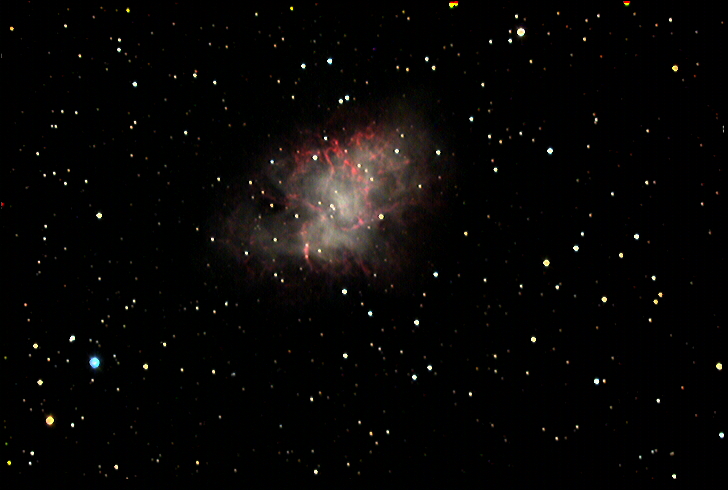
M1 is a supernova remnant from a spectacular Supernova in the year 1054. Records from almost every culture including possibly American Indians living in the Southwest indicate that eh star was the brightest thing in the sky for many weeks and was even visible in the daytime. While it bears the popular designation of Messier 1, It was observed 1741 by John Bevis. Messier acknowledged this in a letter in 1771. Charles Messier observed this object in 1758 and is his first object of nuisance nebula or objects that interfered with his job and that was to search for comets. This color composite is an LRGB image taken with a C-14 operating at f7 and a ST-10 Binned 3x3. |
|
|
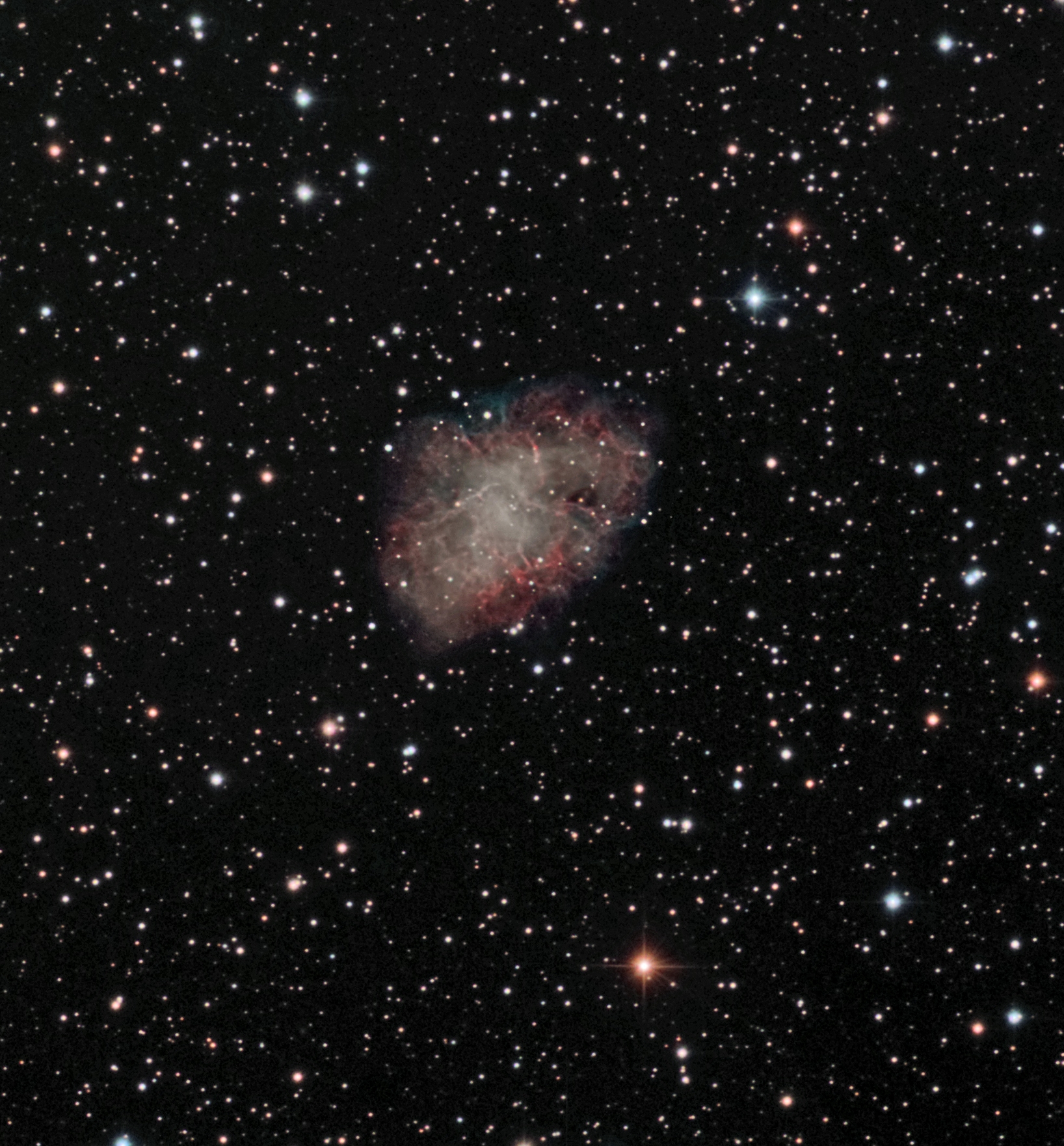
Another
M1 taken with my new 10 inc RC. First image with it shows a lot of promise
but I think its need more signal. 10 min subs just not enough at full
resolution. May try again at 2X2 |
|
|
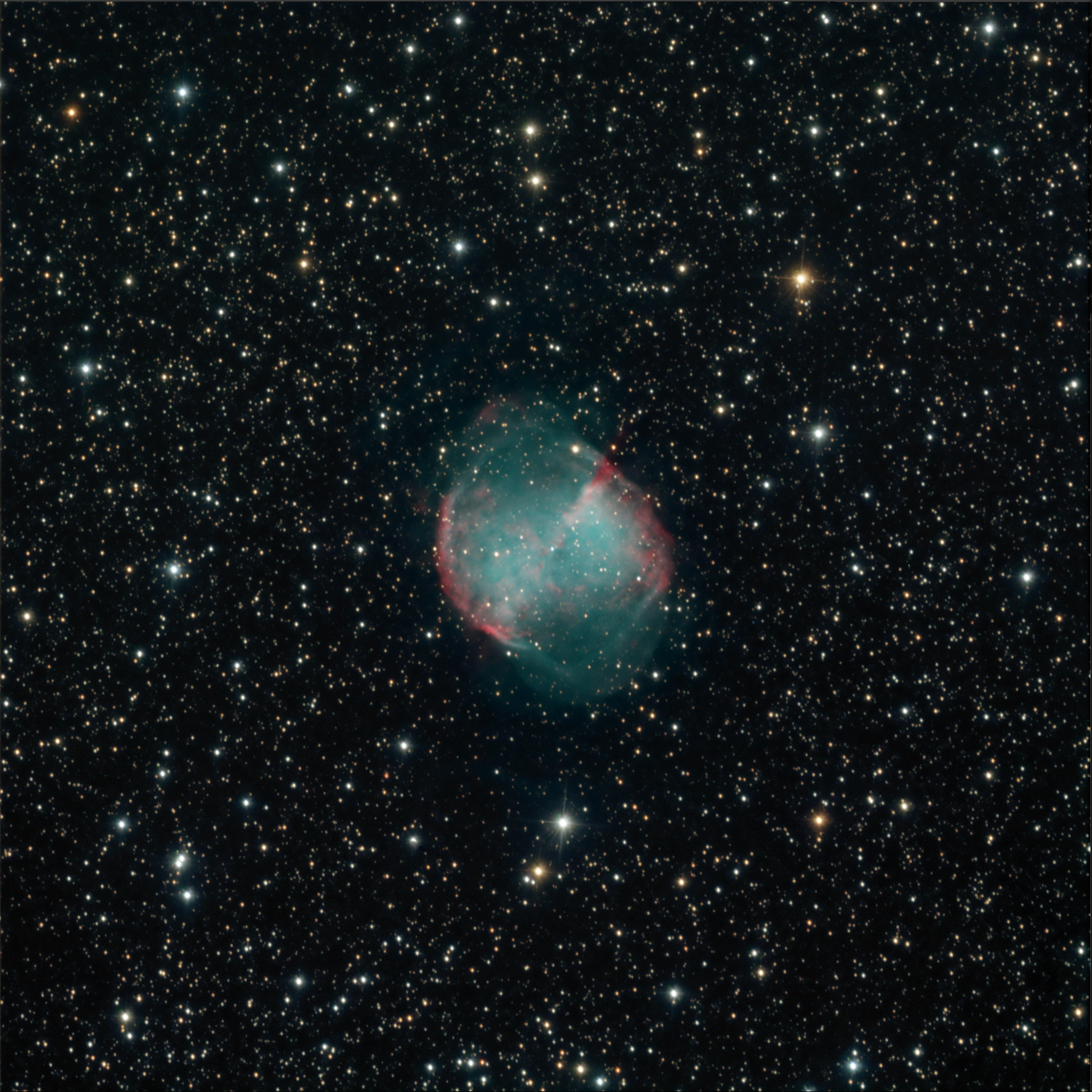
M27
is also known as the Dumbbell Nebula. In a small telescope visual observers
truly do see a dumbbell shape. This full color LRGB version taken with a C-14
and ST-10 at f7 and binned 3x3 shows, not only the dumbbell shape, but
the intricate colors of ionized oxygen (blue-green) and red
(ionized Hydrogen). This is large planetary nebula |
|
|
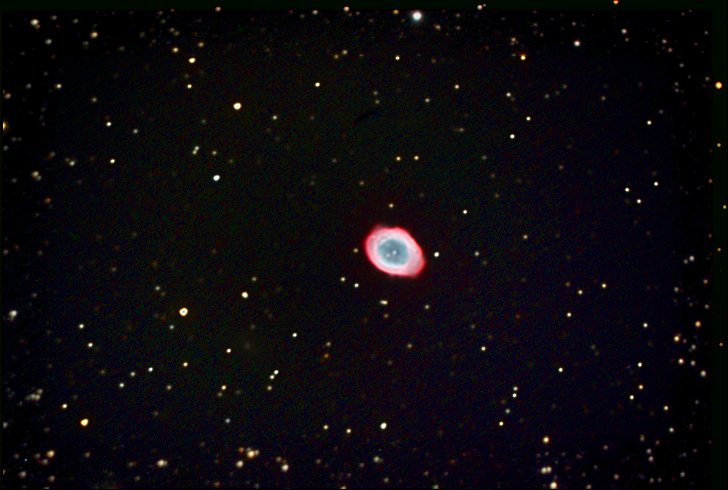
M57
is the famous ring nebula. It is an ovalish planetary nebula with a distinct
central star. The nebula is seen as a very dim smoke ring in smaller scopes.
Larger scopes with high magnification will present the central star and allow
for observing the detail in the ring. Taken with a C-14 at f7 and ST-10,
LRGB CCD Stack and Astrodon filters |
|
|
The
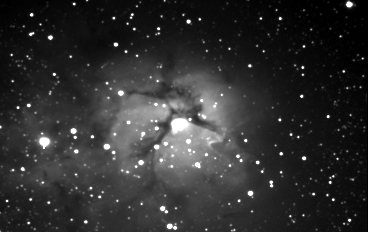
Trifid nebulas M-20 is a small nebula in the constellation of Sagittarius. It
mist prominent characteristics are the dark shadows that separates it into3
ares and its unique color comobination of Emission and Reflection nebula (red
and Blue Colrs). This B&W image was taken at the Texas Star Party Several
years ago with an ST-7, AP 5 inch refractor and G-11 mount. |
|
|
The
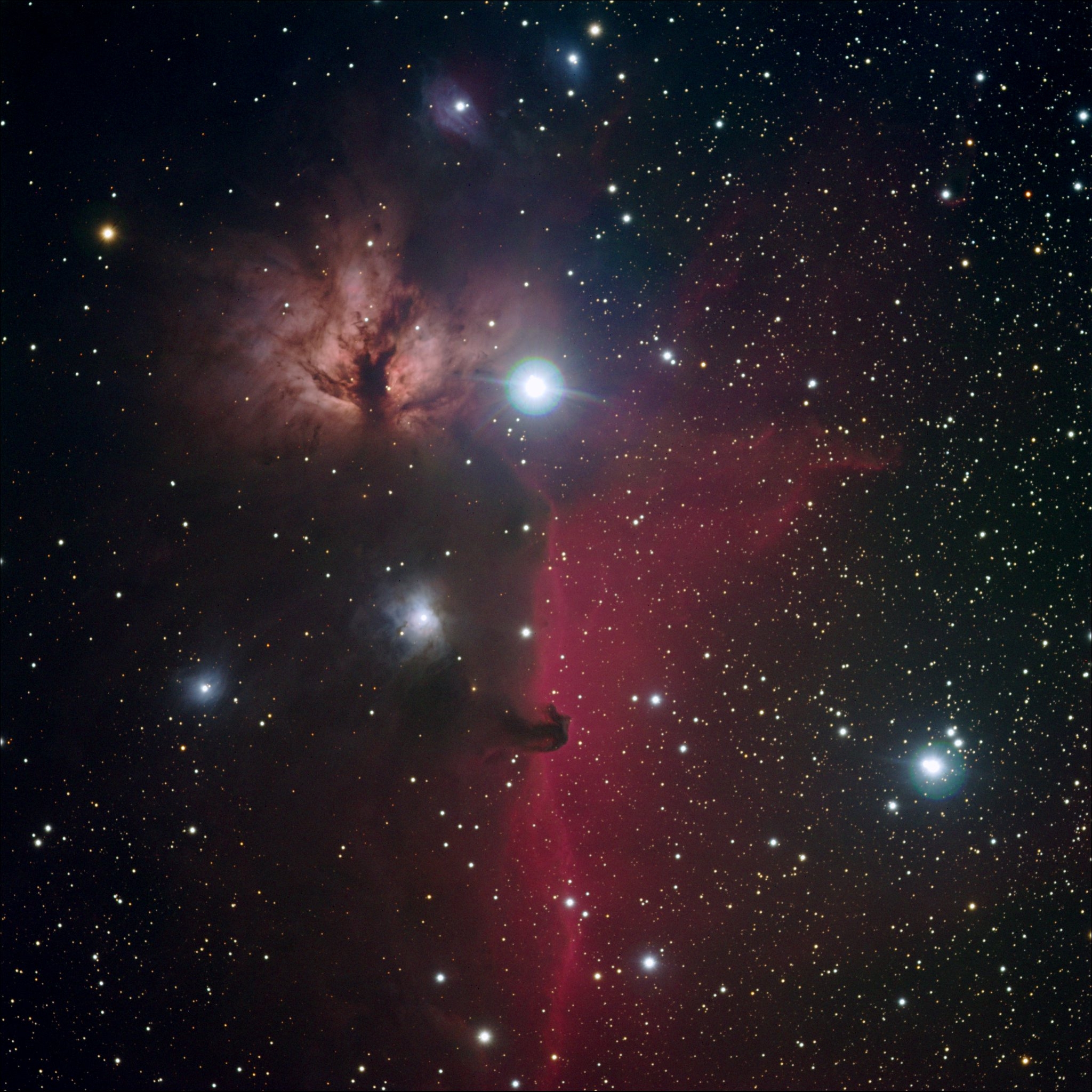
Flame (NGC 2024) and Horse head (IC434 and B33) nebulae are shown in
color. This picture highlights another type of Nebula, a dark one. The
Horse head protruding into the Red Emission nebula as well as the black ledge
are all a large dark nebula. This is a dense area of dust and gas that
attenuate visible light. This is an attempt by me to concentrate on the art
and science of CCD astronomical imaging for artistic reasons. This image was
taken with a STL-4020, Astro Don Filters, and a Takahashi FSQ 106N on an
AP900 mount. THE LRGB Subframes were stacked in CCD Stack and the color
combine accomplished in Photoshop with a slight color saturation adjust to
bring out the colors. |
|
|
IC-405,
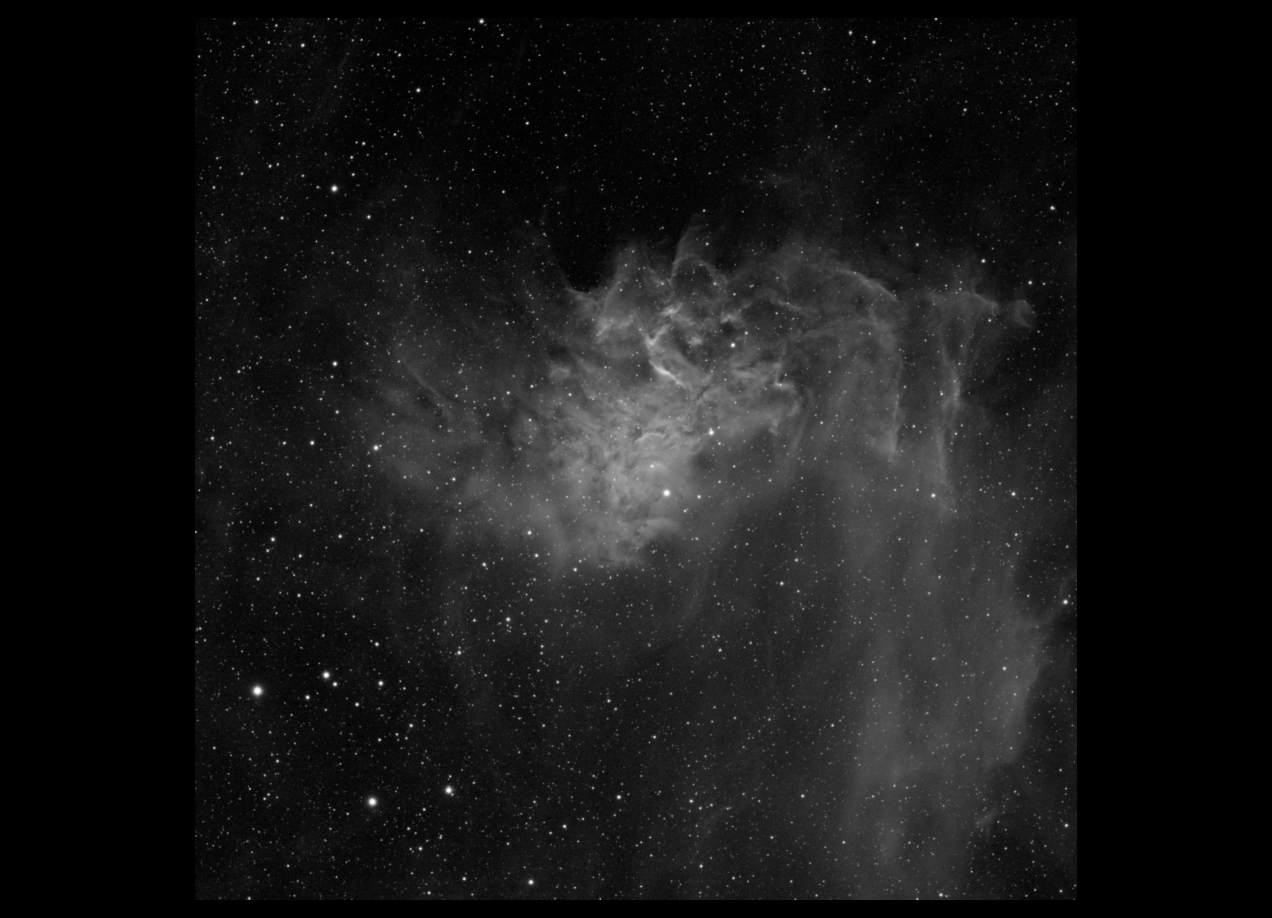
the flaming star Nebula in H Alpha. This an total of 1.5 hour image of
the nebula with the STL-4020 and the FSQ106. The wide field give this nebula
a different than "nominal" appearance |
|
|
The
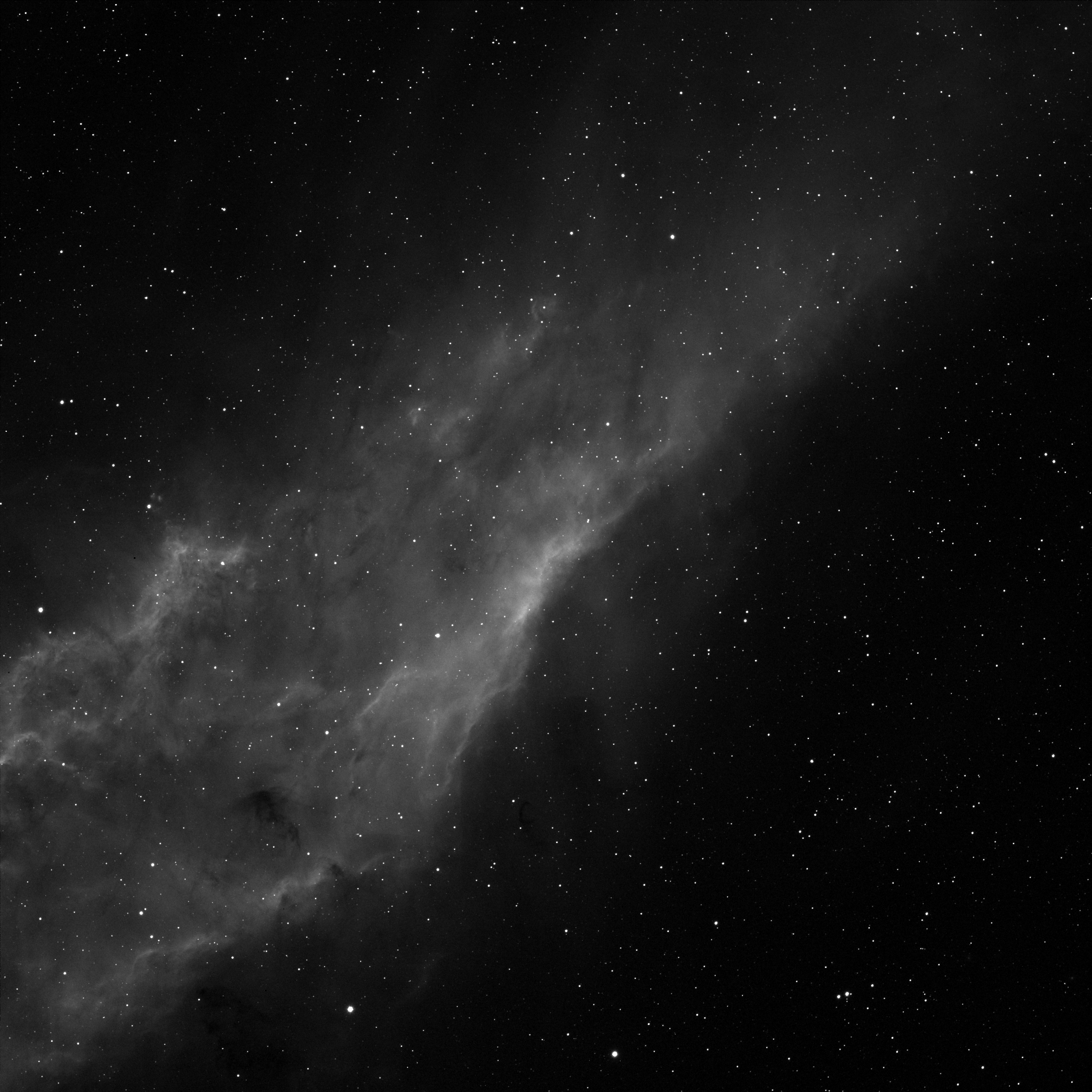
California nebula or NGC1499 in Perseus is a large Emission Nebula similar to
the red nebula behind the horsehead. It distinctive shape vaguely resembles
California, thus the moniker. This is a very large nebula, the image only
show about 60 percent of it. It is 1.5 in Hydrogen Alpha with the STL-4020
and TAK FSQ106. |
|
|
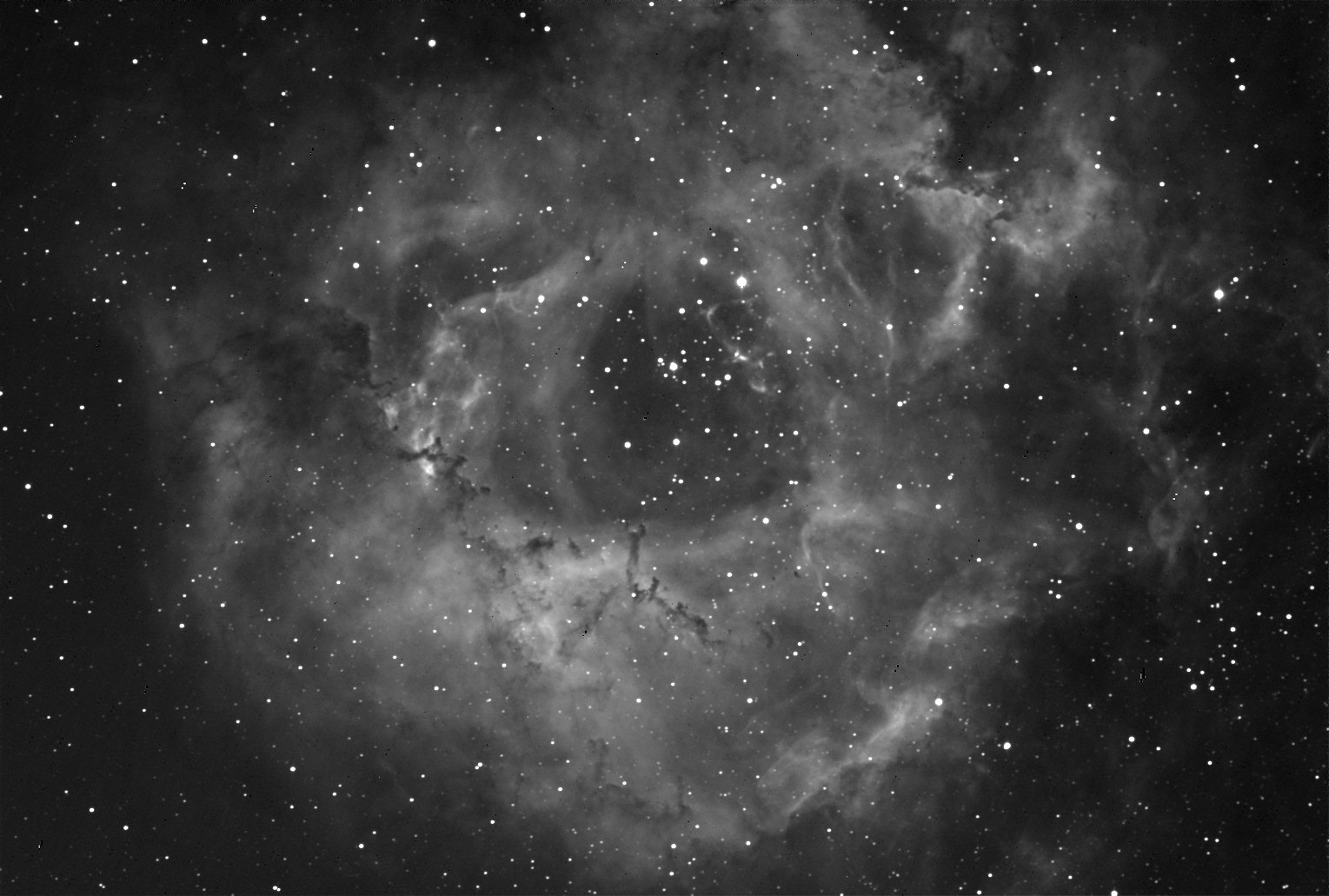
The
Rosette Nebulae in Monoceros surrounds the bright open cluster NGC 2239. This
is a 2 hour image with a TAK FSq106 and ST-10 in H alpha. |
|
|
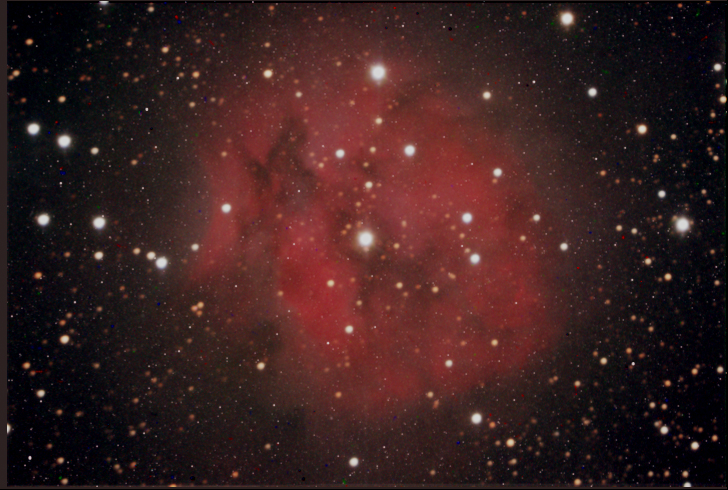
The
Cocoon Nebula is a small cloud of Ionized gas in the Constellation of Cygnus.
Wider field images of this nebula show and impressive dark nebula that
punctuated by the Cocoon at one end. this was taken with an ST-10 and a C-14
at f7 |
|
|
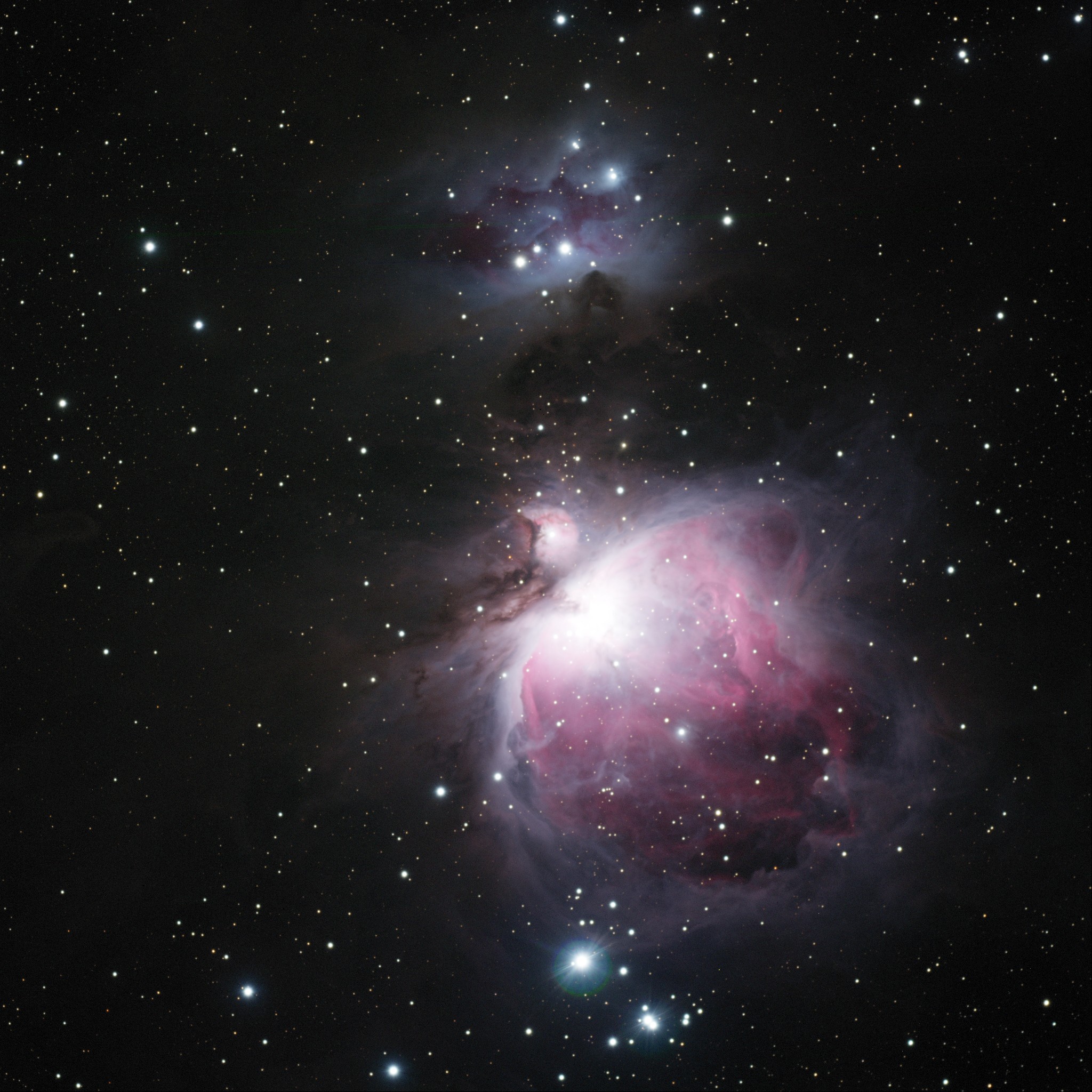
The
image to the right is a wide field shot of the Orion Nebula (M42) the little
separate nebula (M43) and the running man Nebula (NGC1977). This image
shows the wide field possible with the Tak fsq106 and the STL-4020. The image
is over 90 minutes on a side. The image is assembled from 40minutes of L
and 20 minutes of R G B . |
|
|
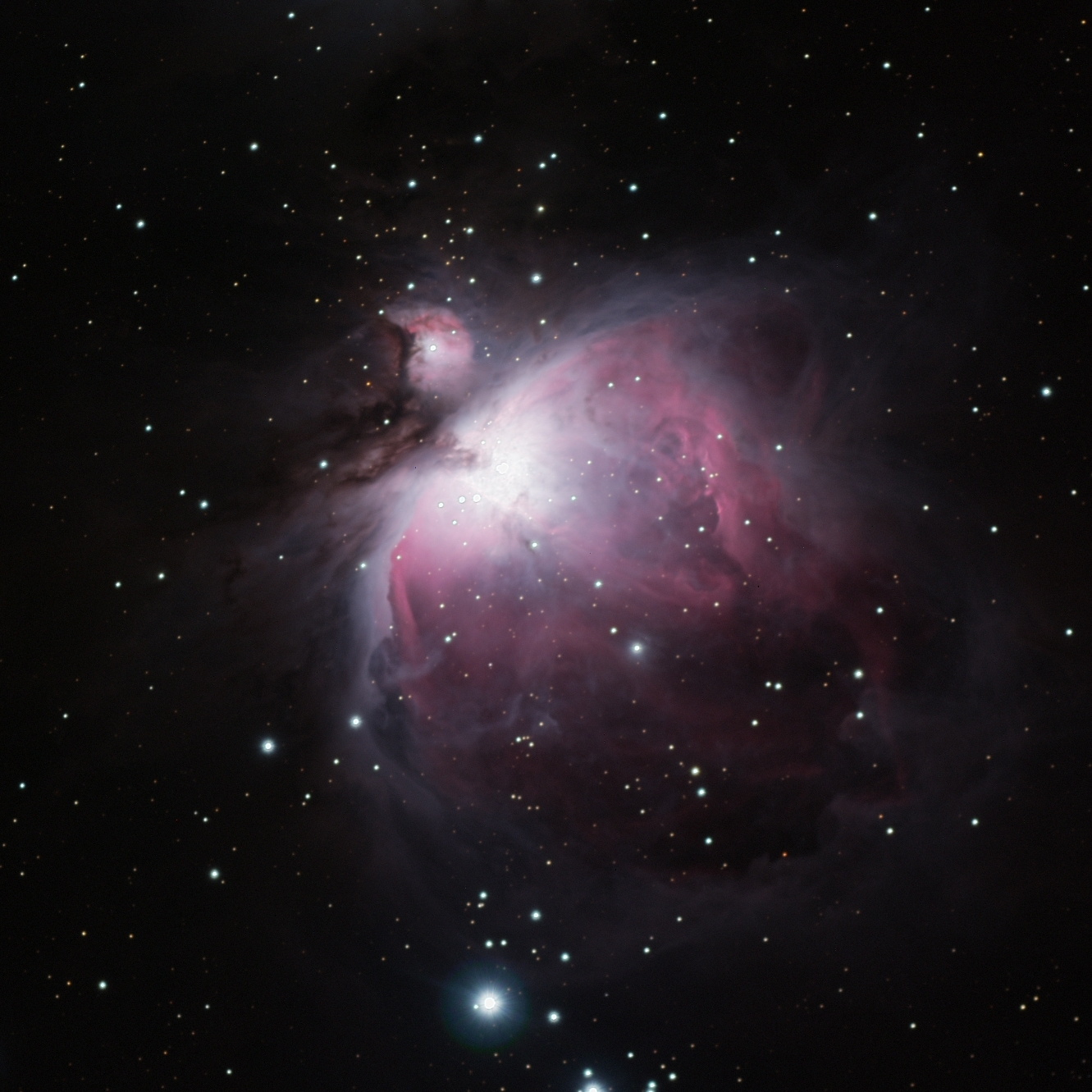
M42
This is a similar image to above taken on the previous night and cropped. In
this case since NGC 1977 is out of frame I did not brighten the image as
much. This kept more of the subtle colors in the nebula The exposure times
are similar |
|
|
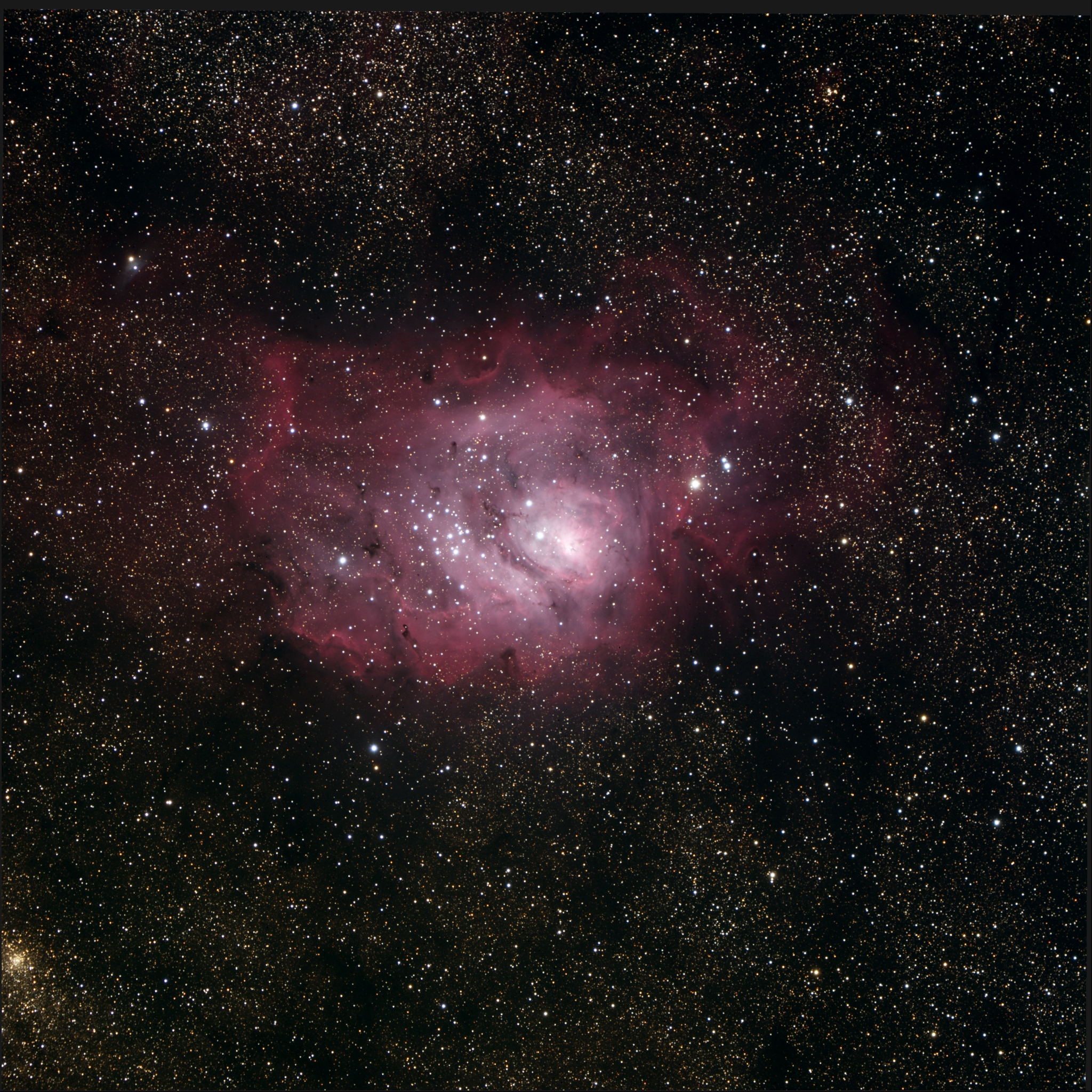
M8
the lagoon Nebula in Sagittarius. This image is not as saturated as you see
other images of M8. My idea here was to make a image that would be as if you
could see the color in your eyepiece what it would look like. thus the
lighter colors |
|
|
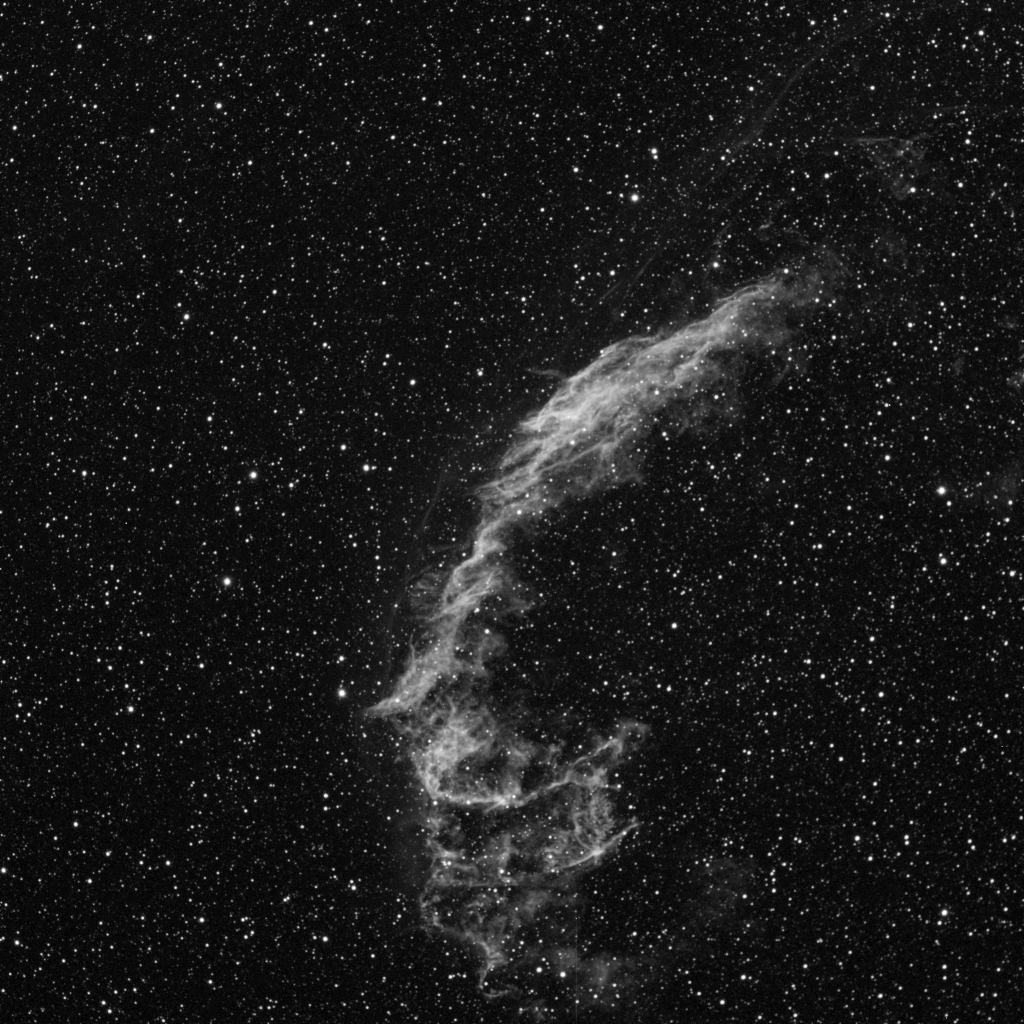
Veil
in H-alpha. H-Alpha imaging is somewhat challenging. The mount must track
very accurately and everything must be stable. The typical subframes are
15 or 20 minutes with guide rates of every 20 seconds or so not uncommon,
since often the guide star is dimmed by the filter. This can be
remedied by a guide scope or an old idea off axis guiding in front of the
filter but I get pretty good results with the equipment I have with 20
second guide stars. |
|
|
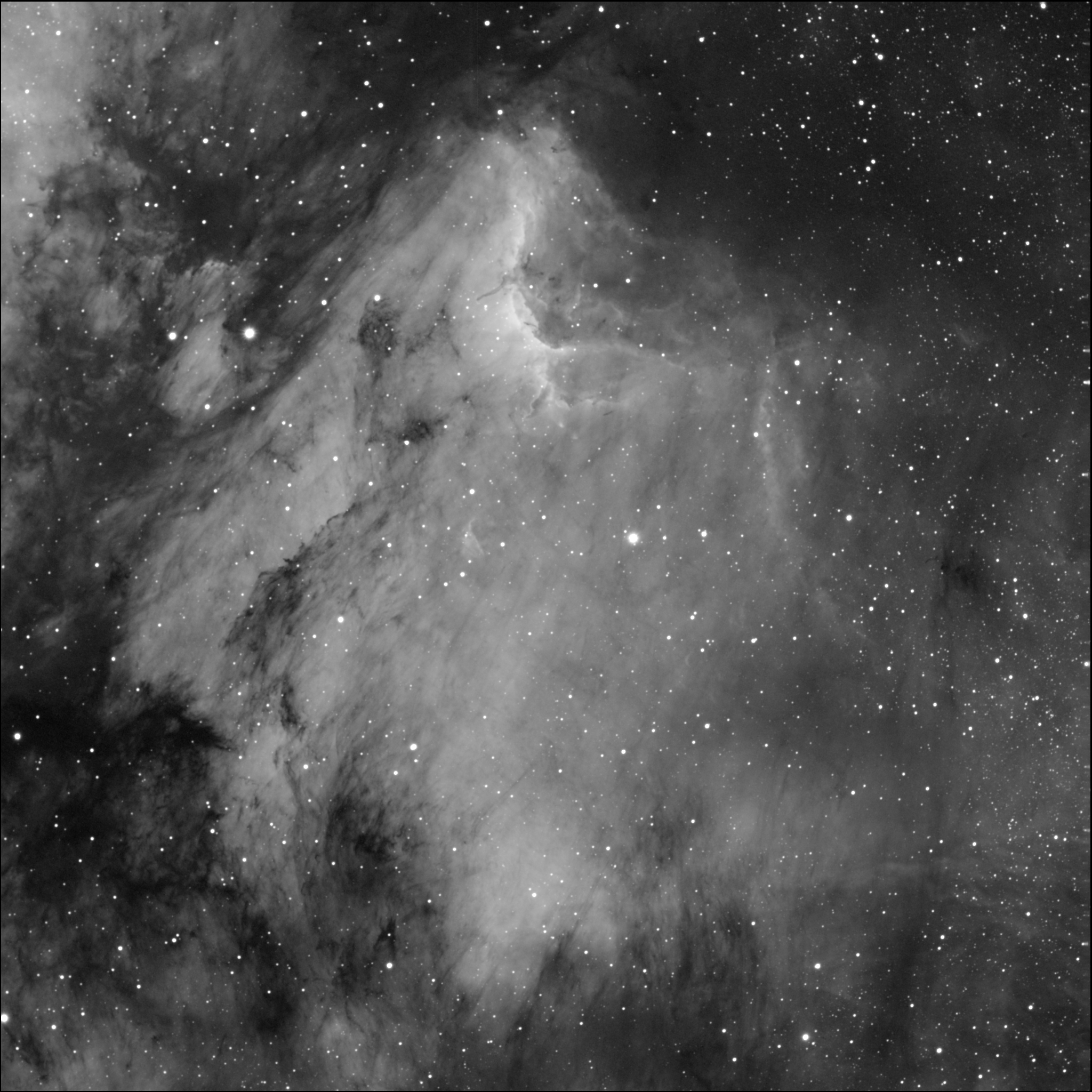
Pelican
Nebula in H-alpha IC 5070 in Cygnus. The Halpha does an incredible job of
presenting detail in this nebulae. |
|
|
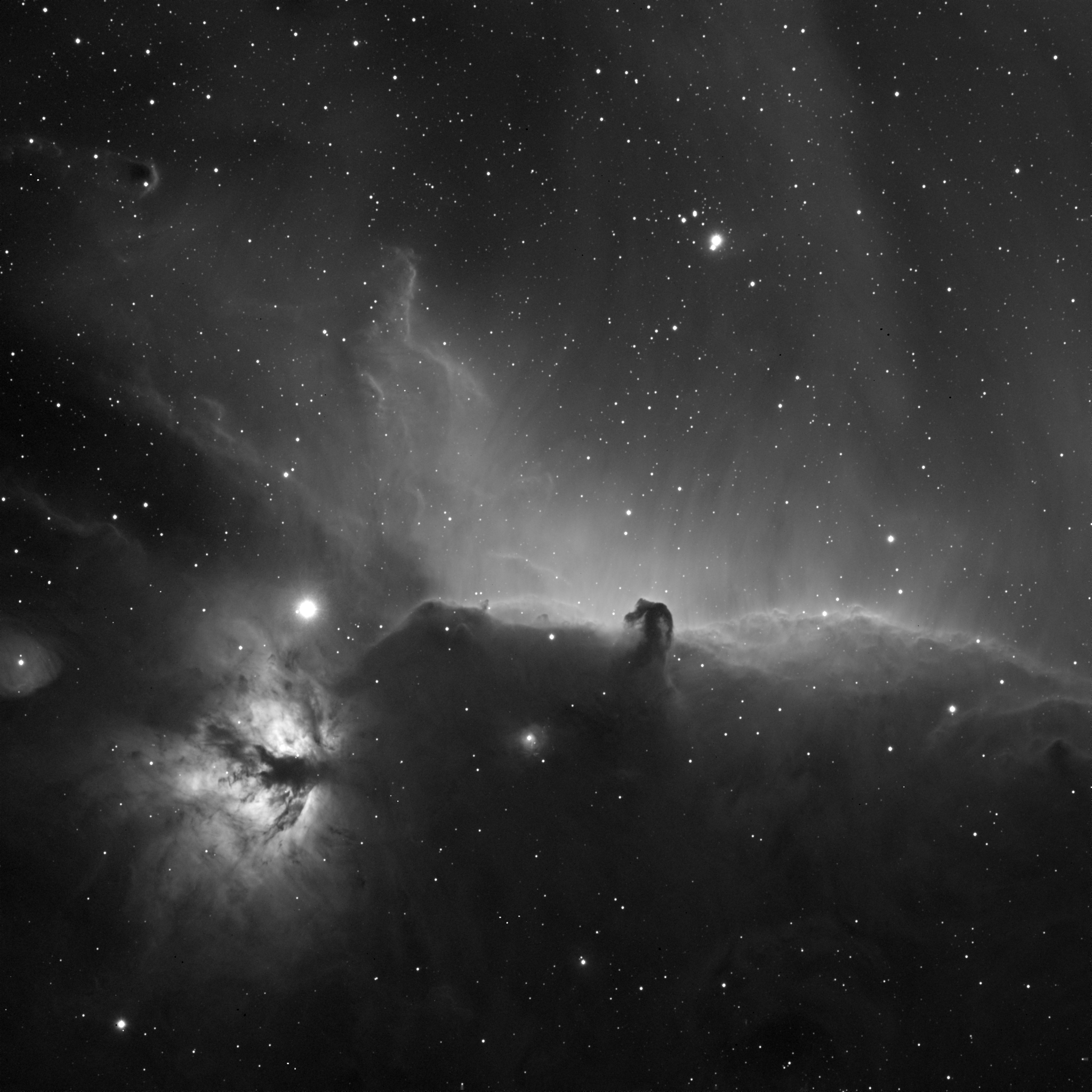
Another
Horse head nebula shot. This one exclusively in H alpha. It is over 3 hours
of imaging combined into a single frame. This image has more detail due to
the very narrow filter and the amount of total data. This image is similar to
the color image above but rotated . |
|
|
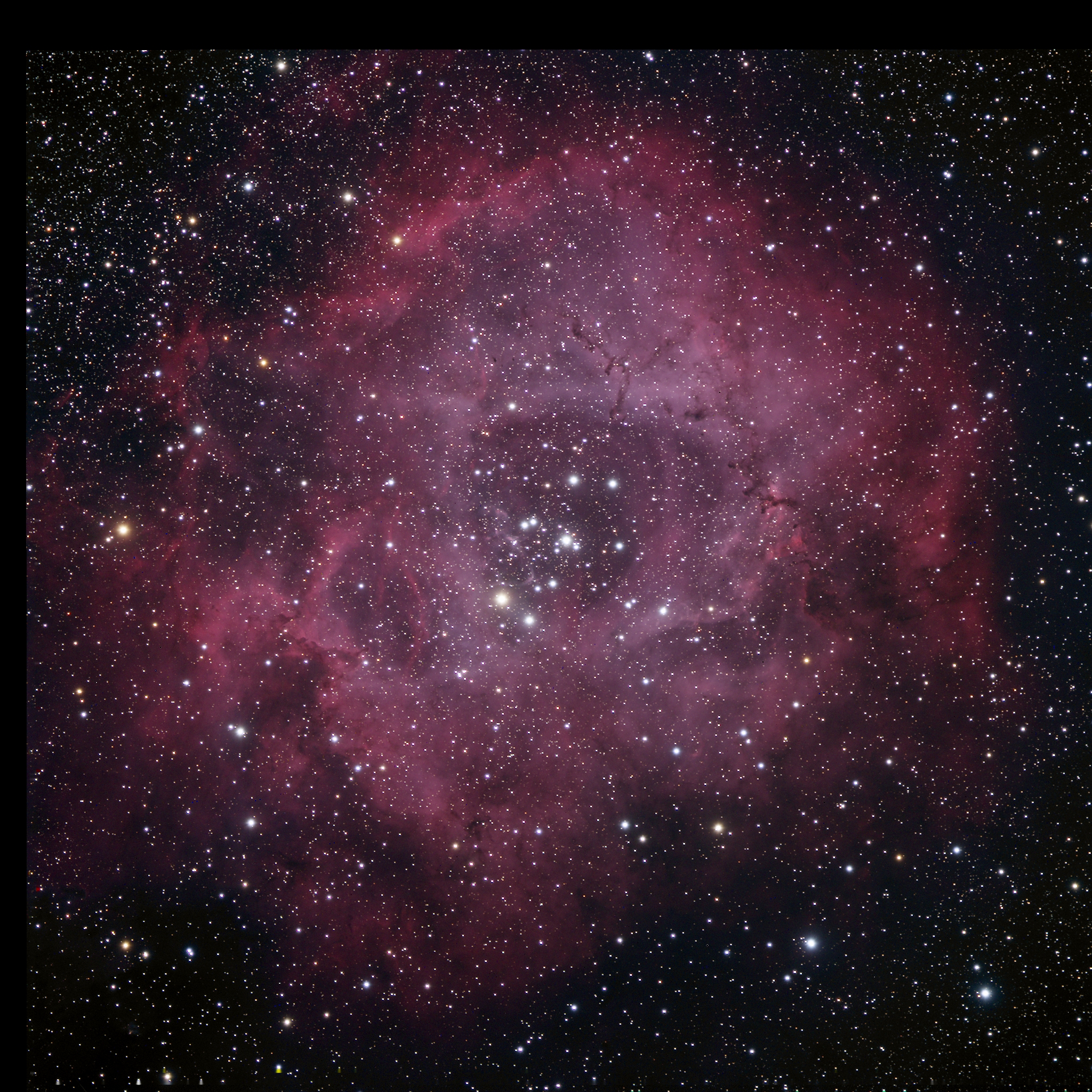
The
Rosette this time in color. Close examination will show the different
hues of red and blue to create a light violet color. The nebula
surrounds the large bright cluster NGC 2239 and is being illuminated by
the bright stars in it. Both emission (red) and reflection (blue) components
are visible resulting the slight violet color |
|
|
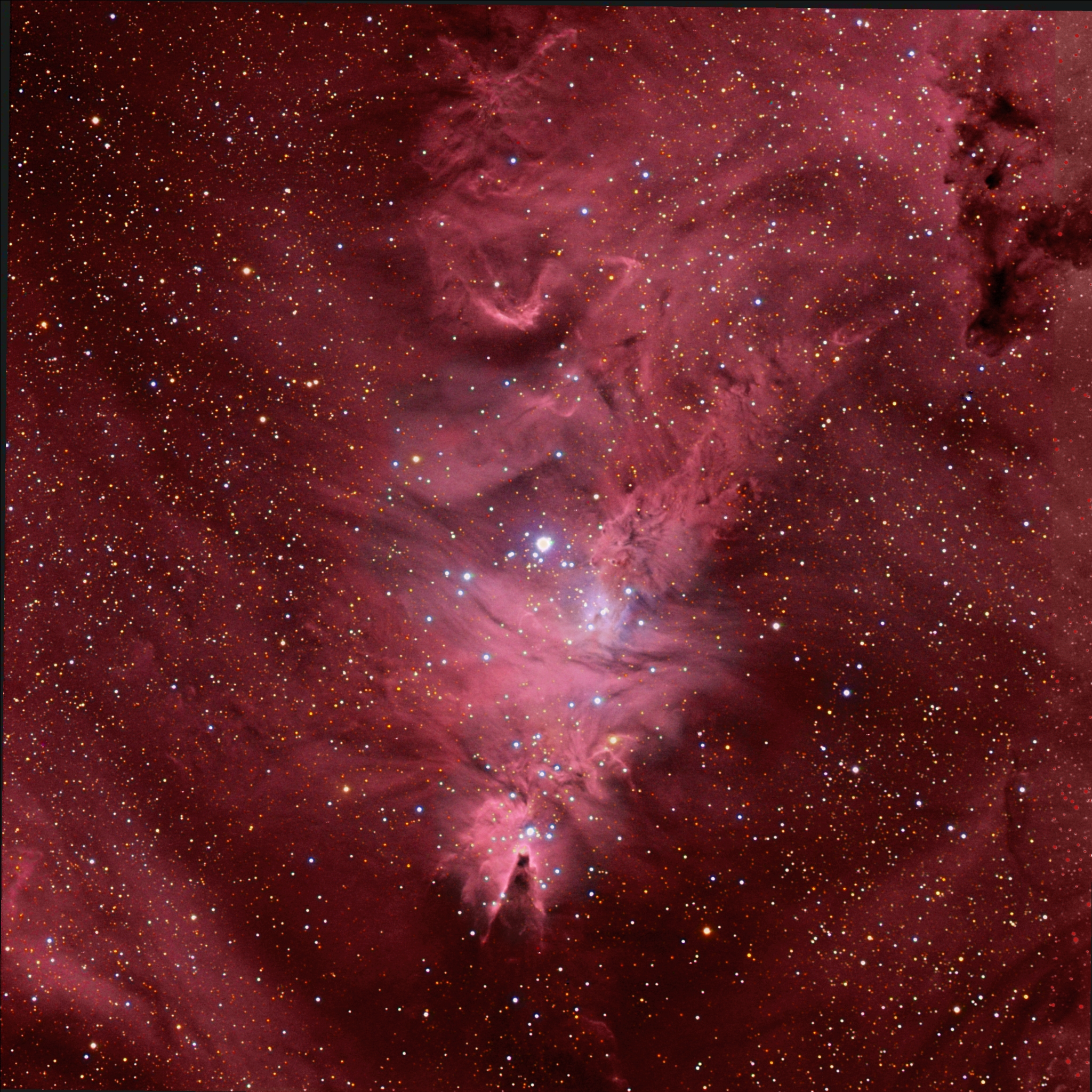
The
Cone nebula NGC 2246, is an Halpha region with a characteristic cone feature.
The "Cone" is actually a small part of this complex. Extreme wide field images
of the area show a massive amount of HAlpha that actually connects to the
nearby Rosette Nebula. The technique used here to preserve the Star colors and
allow in the Red Haplhpa is H Alpha Blending as described in Adam Block's
Tutorials. |
|
|
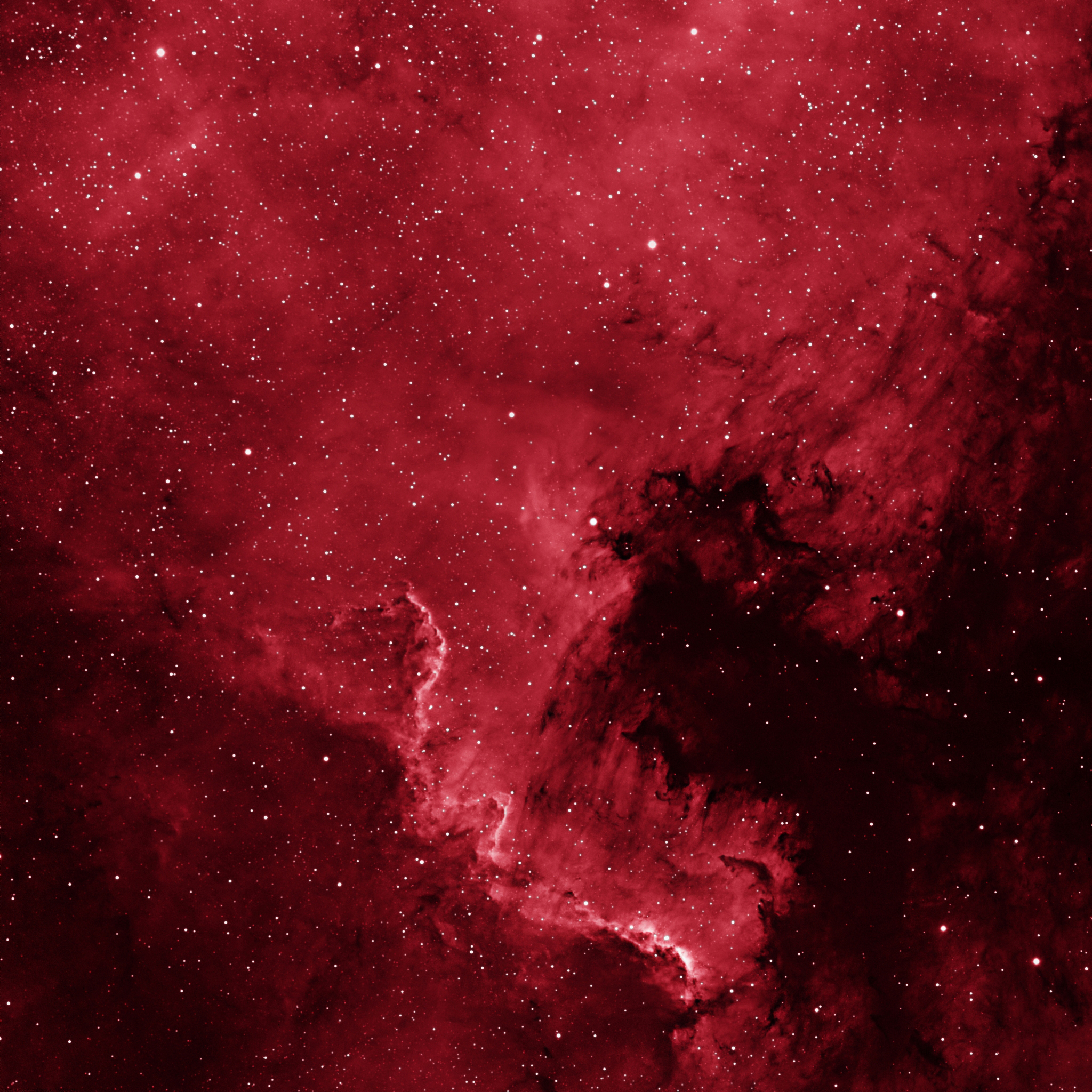
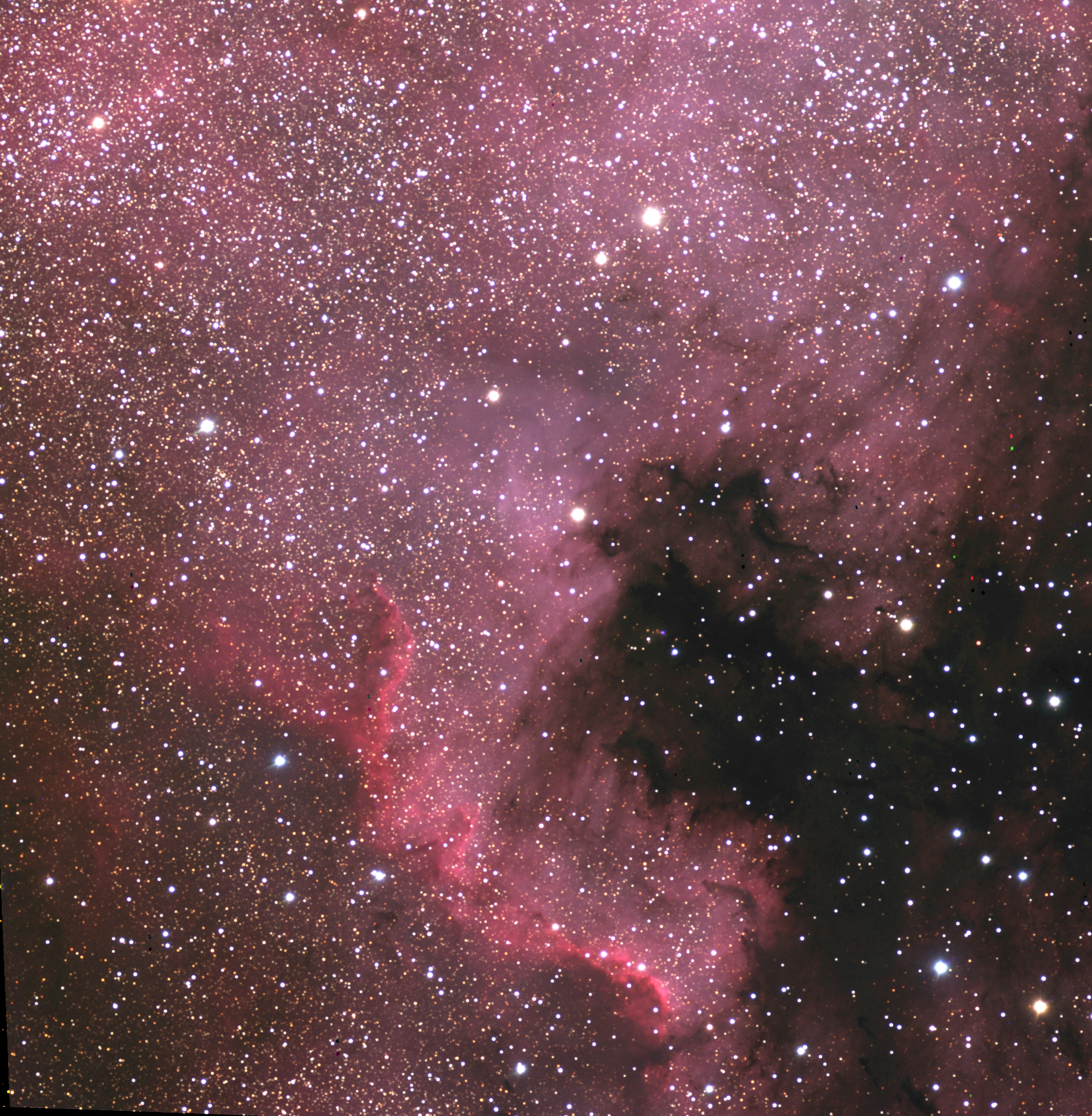
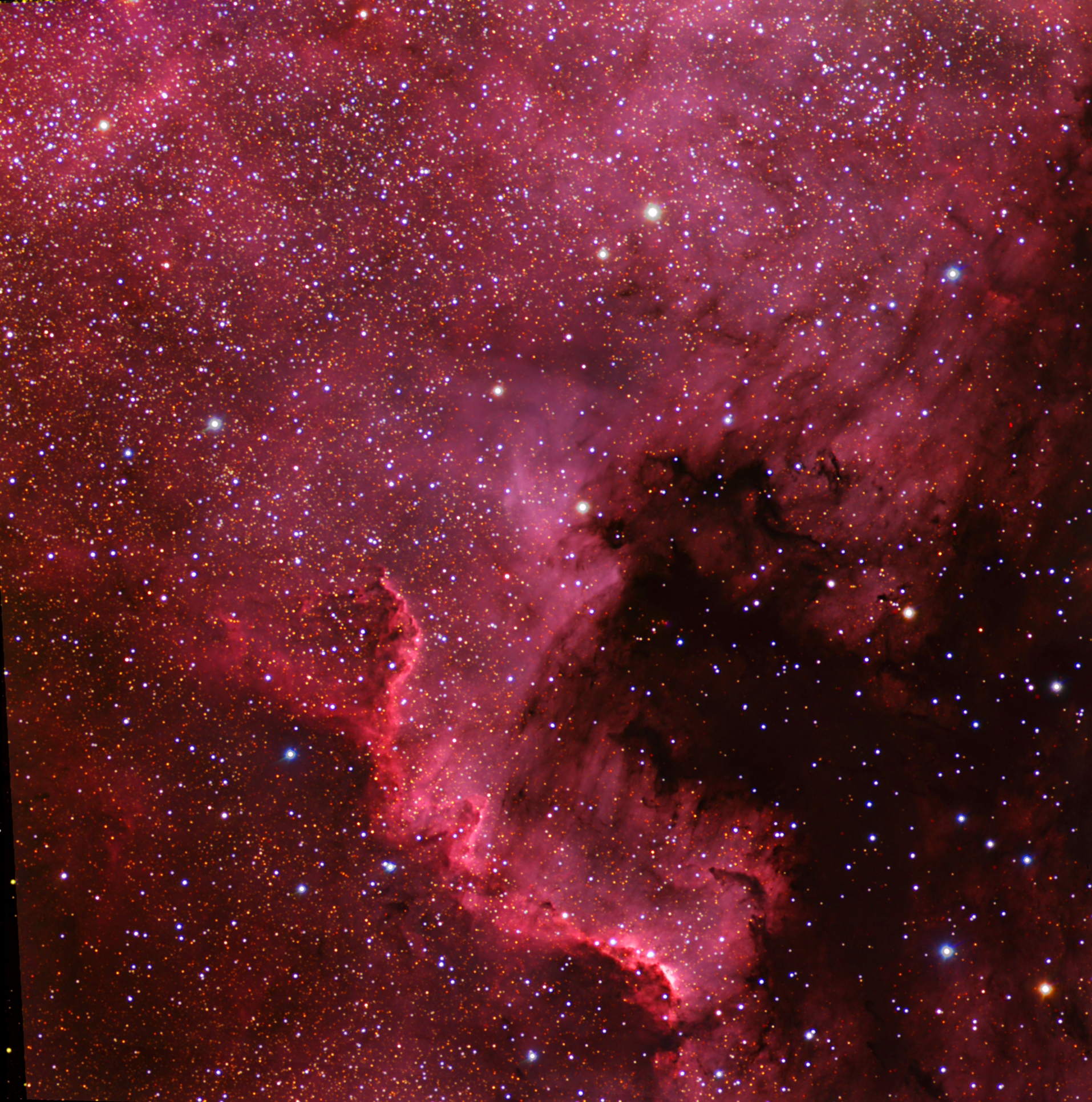
NGC 7000 is often called the North America Nebula because
of its remote similarity in shape to the continent of The comparison between the 3 is striking. While the
Halpha is a more conventional view, it is not at all accurate as to the other
colors that are present in this nebula. Conversely the RGB without Halpha
shows a rather dull pale red background in the large “continent” above the
Central America area. With the Halpha blended in This color is more red and
other details stand out. I like this Halpha blending and plan to continue with
it. |
 |